
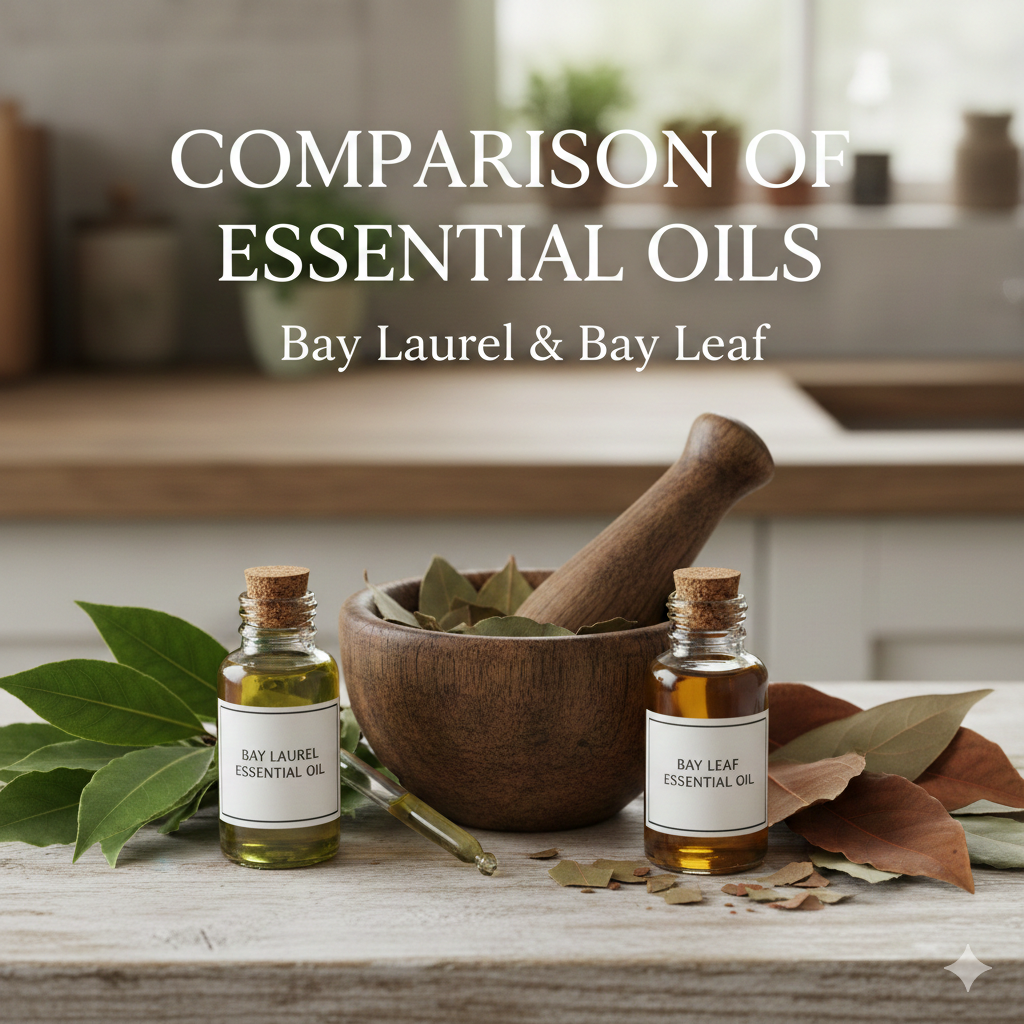
Bay laurel essential oil and Bay Leaf essential oil are two botanicals that are frequently confused — and for good reason. Both are known as “bay”, both produce aromatic essential oils, and both are used in wellness and hair care. However, they come from entirely different plants with distinctly different properties, scents, and uses.
What Is Bay Laurel Essential Oil?
Bay laurel essential oil is derived from Laurus nobilis, a plant native to the Mediterranean region. This is the culinary bay — the familiar dried leaf used in cooking soups, stews, and sauces. The essential oil is extracted from the leaves and berries of the laurel tree through steam distillation.
Bay laurel essential oil has a fresh, sweet, and slightly camphorous scent. Its main active compound is 1,8-Cineole (Eucalyptol), which supports respiratory health and mental clarity.
Common uses of bay laurel essential oil include:
- Supporting respiratory health and clearing congestion
- Improving focus and mental alertness
- Aiding digestion when used in aromatherapy
- Topical use (diluted) for sore muscles and joints
What Is Bay Leaf Essential Oil?
Bay Leaf essential oil — also called West Indian Bay oil — is derived from Pimenta racemosa, a plant native to the Caribbean islands. Despite sharing the name “bay”, this is a completely different botanical species. It is famously used in the production of Bay Rum — a traditional hair and skin tonic popular in the Caribbean.
Bay Leaf (Pimenta racemosa) essential oil has a spicy, warm, and clove-like aroma. Its main active compound is Eugenol, which gives it powerful antimicrobial and warming properties.
Common uses of West Indian Bay Leaf oil include:
- Hair growth stimulation and scalp health
- Warming massage for muscle discomfort
- Traditional Bay Rum aftershave and grooming products
Bay Laurel vs Bay Leaf: Key Differences
| Feature | Bay Laurel (Laurus nobilis) | Bay Leaf (Pimenta racemosa) |
|---|---|---|
| Origin | Mediterranean region | Caribbean islands (West Indies) |
| Scent Profile | Fresh, sweet, medicinal, camphorous | Spicy, warm, clove-like |
| Main Component | 1,8-Cineole (Eucalyptol) | Eugenol |
| Primary Uses | Respiratory support, focus, digestion | Hair care, scalp health, warming massage |
| Culinary Use | Yes (the cooking bay leaf) | No (not traditional European cuisine) |
Safety Considerations
Both oils require careful use and proper dilution. According to The Tisserand Institute, Pimenta racemosa (West Indian Bay) has high levels of eugenol, which may inhibit blood clotting and requires very low dilution — often recommended at 0.9% or less. Bay laurel essential oil contains cineole, which can cause breathing problems in very young children if applied near the face.
Which One Should You Choose?
The answer depends entirely on your intended use:
- For respiratory support or mental clarity, choose Laurus nobilis (Bay Laurel).
- For hair growth or a warming scalp treatment, choose Pimenta racemosa (West Indian Bay Leaf).
Always check the Latin botanical name on the bottle before purchasing, as some retailers may still label Laurus nobilis as “Bay Leaf Oil”.
For more essential oil guides, visit our Essential Oils Library or explore our monthly aromatherapy ritual subscription for curated wellness products delivered to your door.
How to Use Bay Laurel Essential Oil Safely
When using bay laurel essential oil at home, it is important to follow safe dilution guidelines. Like all essential oils, bay laurel should never be applied neat (undiluted) to the skin. A dilution of 1–2% in a carrier oil such as jojoba or sweet almond oil is appropriate for most adults for topical application.
For aromatherapy, add 3–5 drops to a diffuser with water and run for no more than 30–60 minutes at a time. The fresh, camphor-like aroma can help to clear the mind and support focus during work or study sessions.
Bay laurel essential oil blends well with eucalyptus, lavender, rosemary, and frankincense essential oils, making it a versatile choice for both wellness blends and personal care formulations.
Frequently Asked Questions
Is bay laurel essential oil the same as bay leaf oil?
No. Bay laurel essential oil (Laurus nobilis) and bay leaf essential oil (Pimenta racemosa) are derived from entirely different plants. Always check the Latin botanical name on the product label before purchasing.

