
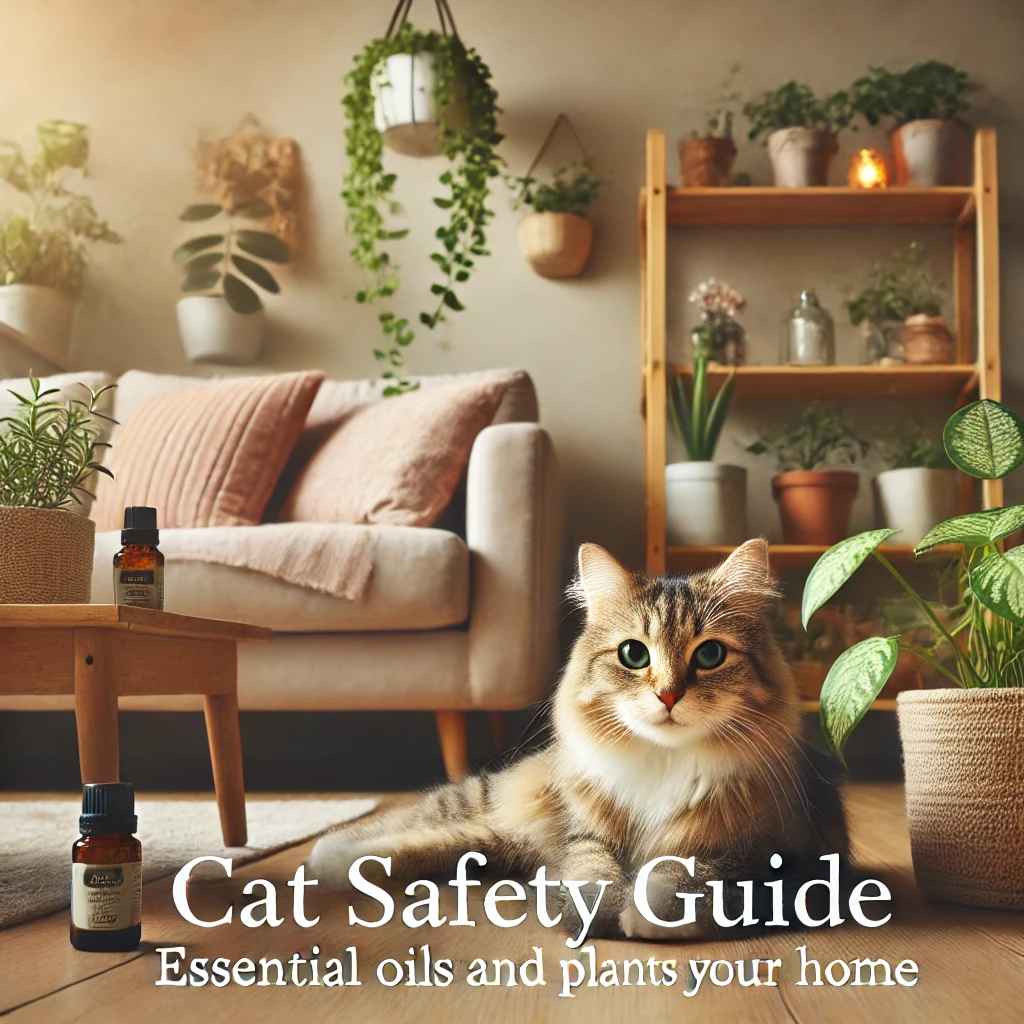
Cat Safety Guide: Essential Oils and Plants in Your Home
As a cat owner, creating a safe environment for your feline friend is crucial. This comprehensive guide covers essential oils safe for cats, toxic oils to avoid, and pet-safe plants to help you navigate the potential risks in your home. Whether you use aromatherapy regularly or just want to keep houseplants, understanding these risks is key to keeping your cat healthy and happy.
Are Essential Oils Safe for Cats?
Cats are particularly sensitive to essential oils due to their liver’s inability to process certain compounds, especially phenols and monoterpene hydrocarbons. Unlike humans and dogs, cats lack the glucuronyl transferase enzyme needed to metabolise many of these compounds, which can lead to toxicity even with small exposures.
Essential Oils to Avoid Around Cats
The following essential oils are known to be toxic to cats and should be kept away from them at all times:
- Eucalyptus – can cause drooling, vomiting, and lethargy
- Tea tree oil (Melaleuca) – highly toxic, even in small amounts
- Ylang-ylang – can cause rapid heart rate and breathing difficulties
- Citrus oils (lemon, orange, grapefruit) – contain limonene which is toxic to cats
- Pine oils – can cause liver damage
- Cinnamon, clove, and thyme – high in phenols and very toxic
- Pennyroyal – can cause serious liver damage
- Peppermint – can cause nervous system issues in cats
Essential Oils Considered Safer for Cats
While no essential oil is 100% safe for cats, some are considered lower risk when used with extreme caution, proper dilution, and good ventilation. Always consult a vet before using any essential oils around your pets:
- Lavender – known for calming effects; may help reduce stress and anxiety in cats when diffused sparingly
- Chamomile (German and Roman) – has soothing properties; can help calm nervous cats
- Frankincense – supports the immune system and has anti-inflammatory properties
- Cedarwood – promotes relaxation and may help repel fleas naturally
- Helichrysum – known for its healing properties; may help with minor skin irritations
- Petitgrain – has calming effects and may help reduce anxiety
It is important to note that even these oils should be used with extreme caution. Ensure proper ventilation at all times, never apply essential oils directly to a cat’s skin or fur without professional veterinary guidance, and always provide your cat a way to leave the room.
Safety Measures When Using Essential Oils Around Cats
- Store all essential oils out of your cat’s reach in securely sealed containers
- Wash your hands thoroughly after handling any essential oils
- Use only heavily diluted essential oils if diffusing near pets
- Keep cats out of rooms where diffusers are running and ensure good ventilation
- Avoid cleaning products that contain essential oils
- Always consult your veterinarian before introducing any essential oils around your cat
- Monitor your cat closely when introducing any new oil, even those considered safer
Pet-Safe Plants for Your Home
Many common houseplants can be toxic to cats. Here are some cat-friendly options that can beautify your home safely:
- Boston Fern (Nephrolepis) – lush and non-toxic to cats
- African Violet (Saintpaulia) – colourful flowers safe for cats
- Spider Plant (Chlorophytum) – easy to grow and cat-safe
- Areca Palm (Dypsis lutescens) – a great air purifier that is pet-safe
- Ponytail Palm (Beaucarnea recurvata) – low maintenance and non-toxic
- Purple Waffle Plant (Hemigraphis alternata) – beautiful and cat-friendly
Creating a Cat-Safe Environment at Home
To ensure your cat’s safety when using aromatherapy or houseplants:
- Research any plant before bringing it home — the ASPCA toxic plant list is a great resource
- Place plants out of your cat’s reach or in cat-free rooms
- Monitor your cat’s behaviour around new plants
- Provide cat grass or catnip as a safe plant alternative
- When using essential oils, start with small amounts and observe your cat’s reaction carefully
- Always use essential oils in well-ventilated areas
- Never apply essential oils directly to your cat’s fur or skin
By following these guidelines, you can create a beautiful, fragrant home that is also safe for your feline companion. If you are interested in learning more about pet-safe aromatherapy, check out our Pet-Friendly Essential Oils Guide for more detailed information. Remember, when in doubt about a plant or essential oil’s safety, always consult your veterinarian — every cat is unique.
