
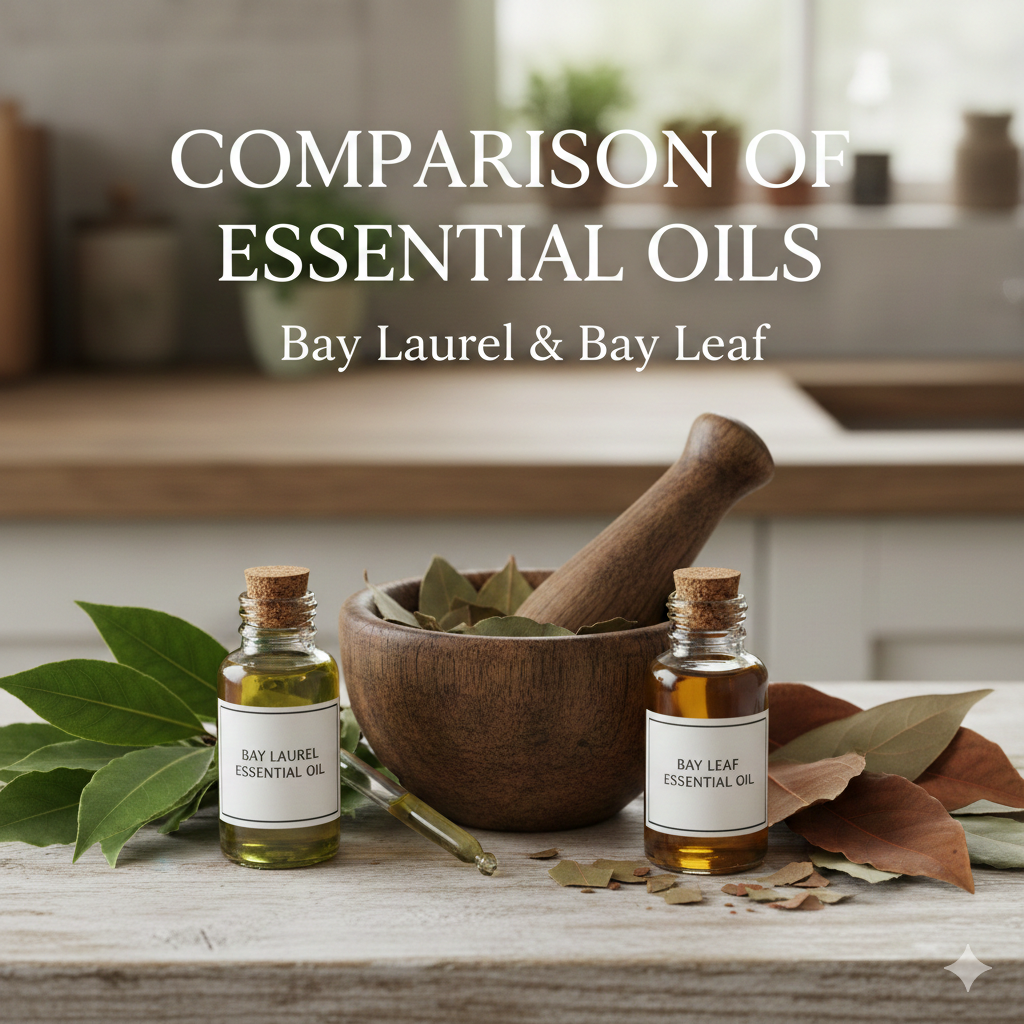
Comparison of the Two Bay Laurel and Bay Leaf Essential Oils
| Feature | Bay Laurel (Laurus nobilis) | Bay Leaf (Pimenta racemosa) |
|---|---|---|
| Common Names | Sweet Bay, Laurel Leaf, Mediterranean Bay | West Indian Bay, Bay Rum Tree |
| Origin | Mediterranean region | Caribbean islands (West Indies) |
| Scent Profile | Fresh, sweet, medicinal, and camphorous | Spicy, warm, and clove-like |
| Main Component | 1,8-Cineole (Eucalyptol) | Eugenol |
| Primary Uses | Respiratory issues, focus, and digestion | Hair growth, scalp health, and warming massage |
Key Differences to Note
- Culinary vs. Cosmetic: Bay Laurel (Laurus nobilis) is the source of the common bay leaf used in cooking stews and soups. Bay Leaf (Pimenta racemosa) is famously used to produce Bay Rum cologne and hair tonics but is not used in traditional European cooking.
- Safety: Both oils can cause skin irritation. Pimenta racemosa (West Indian Bay) has high levels of eugenol, which may inhibit blood clotting and requires very low dilution (often recommended at 0.9% or less). Laurus nobilis (Bay Laurel) contains cineole, which can cause breathing problems in very young children if applied near the face.
- Confusion: In 2026, some retailers may still label Laurus nobilis as “Bay Leaf Oil”. Always check the Latin botanical name on the bottle to ensure you have the correct oil for your intended use.
Are you planning to use the oil for hair care or for clearing congestion? This will help determine which one is right for you.
